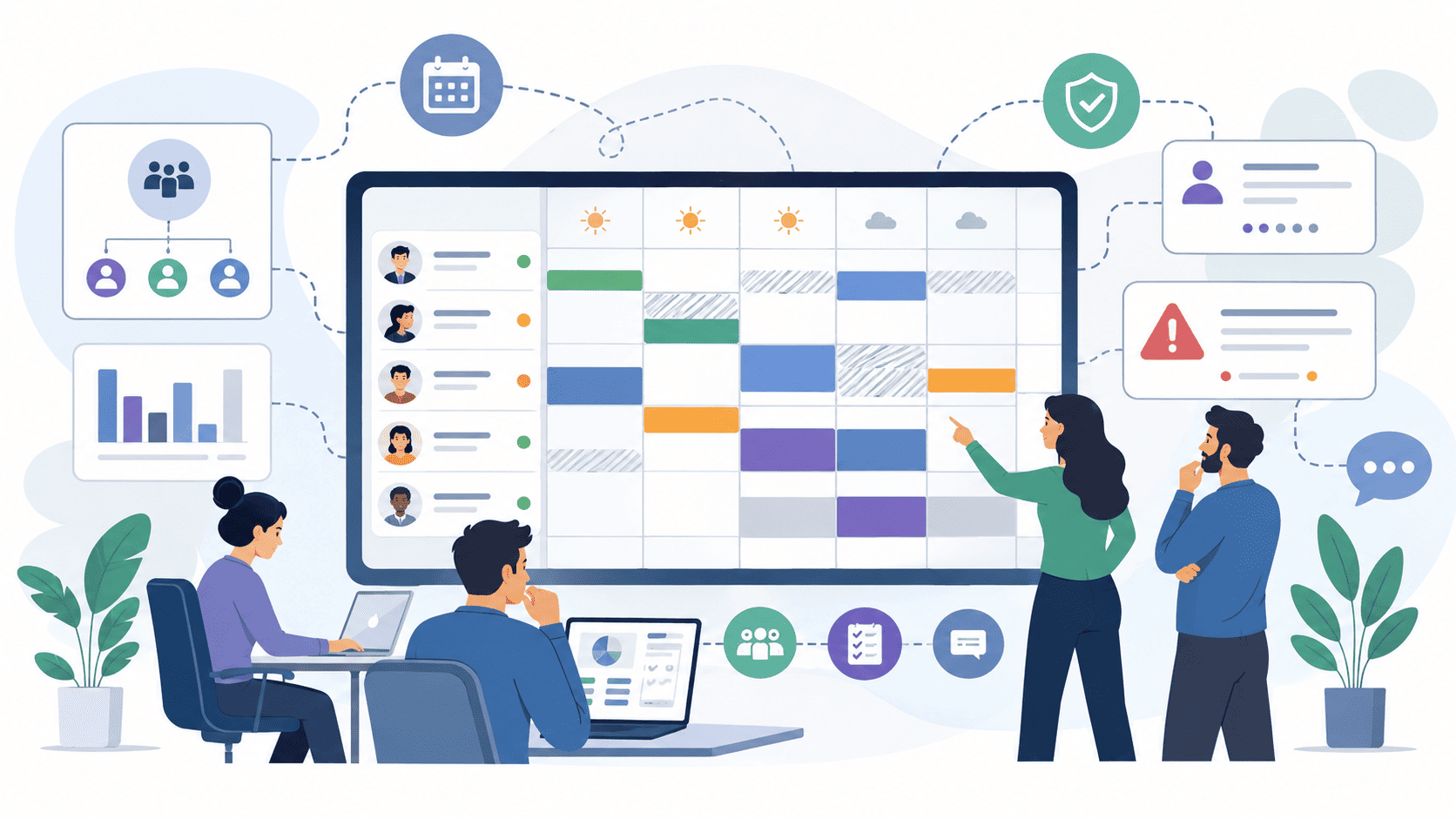
Efficient collaboration is vital, yet fragmented team availability and blockers often hinder progress. Without a clear, centralized view, scheduling and project planning become time-consuming, causing delays and miscommunications. This directly impacts productivity and obstructs strategic goals.
Imagine every team member's weekly schedule, including availability, focus times, and known impediments, easily accessible in one unified location. This is the goal of a centralized library for availability and blockers. It offers a dynamic overview, facilitating proactive planning and resource optimization across departments.
Implementing such a library fosters transparency and accountability. Everyone understands collective capacity and potential bottlenecks. This clarity empowers managers to make informed decisions on workload distribution, minimizing overcommitment and burnout. It is a strategic investment in operational excellence.
A centralized repository significantly reduces constant availability checks. Information is readily available on demand, freeing up valuable time for focused work. This allows teams to dedicate energy to impactful tasks, not administrative coordination. For Clockwise Brief Pages, this efficiency is paramount for client service.
This library also provides invaluable data for long-term strategic planning. By analyzing availability patterns and common blockers, organizations can identify systemic issues, optimize team structures, and forecast future capacity. This data-driven approach transforms reactive problem-solving into proactive strategic foresight.
Expert opinions diverge on optimal implementation. Some advocate for off-the-shelf solutions, citing immediate availability, established features, and vendor support. These platforms often include pre-built integrations and robust security, reducing IT burden. The argument emphasizes speed to deployment and leveraging proven technology.
Conversely, other experts champion custom-built solutions for unique operational nuances or specific data privacy needs. Though requiring initial investment, this offers unparalleled flexibility to tailor every feature. For Clockwise Brief Pages, a custom solution could perfectly align with bespoke workflows, providing a competitive edge.
A common contention involves the level of detail in availability reporting. Some argue for granular breakdowns, including task focus times, while others prefer broader "available/unavailable" status to preserve autonomy. Finding the right balance is crucial for usefulness without being overly intrusive or burdensome to maintain. This tension requires careful negotiation.
Finally, integration is a frequent challenge. A centralized library maximizes value when seamlessly integrated with existing tools: calendars, project management, and communication platforms. Complex integrations, especially in diverse tech stacks, can be a major hurdle. This demands expertise and careful planning to avoid data silos and ensure real-time synchronization.
Building a centralized library for availability and blockers represents a significant step towards operational excellence. Despite potential implementation challenges, the gains in collaboration, resource optimization, and reduced administrative burden are substantial for any organization aiming for greater efficiency.
Success hinges on careful planning, choosing the right solution (custom or off-the-shelf), and fostering a culture of transparency and trust regarding data usage. Clear communication is vital for smooth adoption and long-term utility.

Lorenzo Peterson
23/05/2026This article highlights a critical need in modern teams. I particularly appreciate the emphasis on transparency and how it reduces administrative overhead. It's a solid argument for better resource management.
Eden Reynolds
25/04/2026Thank you for your feedback! We agree that transparency is key. While implementation can be complex, the long-term benefits for team efficiency are undeniable.
Kaitlyn Russell
23/05/2026The discussion on custom vs. off-the-shelf solutions was very insightful. It’s a common dilemma. I wonder if there are hybrid approaches that combine the best of both worlds, perhaps using an existing framework with significant customization.
Benjamin Ruiz
25/04/2026That's an excellent point. Hybrid models are indeed gaining traction, offering a balance between rapid deployment and tailored functionality. It often depends on the organization's specific scale and unique requirements.
Blake Jones
23/05/2026As someone who struggles with scheduling across multiple time zones and team availabilities, a centralized library sounds like a dream. The article clearly articulates the practical benefits and challenges.
Ethel Martin
25/04/2026We're glad to hear the article resonated with your experiences! The aim is precisely to address those common pain points and offer a clear path towards more streamlined operations.
Leave your comments